
Neuromodulation in Turkey · Istanbul
Deep brain stimulation for dystonia
Deep brain stimulation (DBS) is a surgical treatment for dystonia that places thin electrodes in the globus pallidus and delivers adjustable stimulation to calm the brain signals that cause twisting movements, abnormal postures and pain. It is the most effective option when medicines and botulinum toxin no longer control dystonia, and its benefit is proven in sham-controlled randomized trials.[1][2]
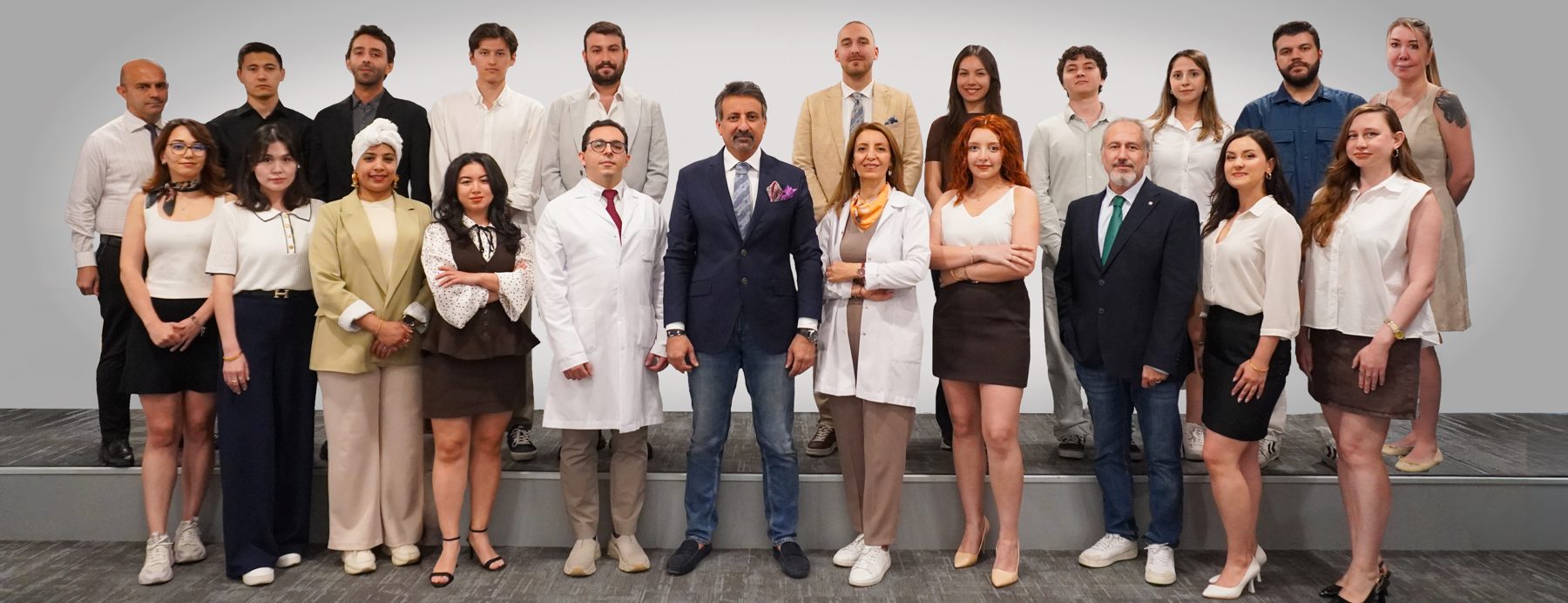
At Neuromodulation in Turkey, Prof. Atilla YILMAZ, MD and a dedicated 25-member DBS team have performed 1,200+ neuromodulation procedures, including 800+ DBS surgeries, for patients from 60+ countries. This site explains every form of dystonia, with special focus on cervical dystonia and Meige syndrome.
Medically reviewed by Prof. Atilla YILMAZ, MD ·

Understanding dystonia
Which dystonia do you or your family member have?
Dystonia is a movement disorder in which muscles contract on their own, pulling the body into twisting movements or fixed postures. The type decides the treatment and how well DBS works.
Cervical dystonia
Head turning, tilting or pulling, neck pain and head tremor. Also called spasmodic torticollis.
Eyes, face, jaw · cranialMeige syndrome
Eyelid spasms with jaw, mouth and tongue dystonia. Also called orofacial dystonia.
Whole bodyGeneralized dystonia
Trunk and limbs involved, usually from childhood; often genetic (DYT1).
Neighbouring regionsSegmental dystonia
Two or more connected regions, such as face and neck. Also called regional dystonia.
One regionFocal dystonia
Neck, eyelids, jaw, voice, hand or foot: the most common dystonias in adults.
Medication-inducedTardive dystonia
Tardive dystonia and tardive dyskinesia after dopamine-blocking medications.
GeneticsDYT1, DYT6, DYT11…
How the gene behind dystonia predicts the result of DBS.
CausePrimary vs secondary
Why dystonia without brain damage responds best to DBS.
Evidence
How well does DBS work for dystonia?
In published clinical trials and meta-analyses, DBS improved dystonia rating scales by about 50–70% on average in isolated dystonia, and by 76% in tardive dystonia. Results are lower when dystonia is caused by brain damage. These are literature averages. In our own case series, patients treated with DBS for cervical dystonia, Meige syndrome and myoclonus-dystonia have shown more than 90% improvement in their symptoms, based on clinical assessment and documented on video. Individual results vary.
Patient videos
Our patients with cervical dystonia and Meige syndrome
Before-and-after videos of patients treated by Prof. YILMAZ. All patients gave written consent for publication.


Who we are
A center that focuses on DBS
Neuromodulation in Turkey is the deep brain stimulation center founded and led by Prof. Atilla YILMAZ, MD at Ataşehir Medicana International Hospital, Istanbul. Prof. YILMAZ holds official proctorship agreements with Medtronic, Abbott and Boston Scientific — the world's three leading manufacturers of DBS systems appoint him to train other neurosurgeons on their technology.
Every operation is planned on 3 Tesla MRI. Prof. YILMAZ was the first surgeon in Turkey to use the Abbott Liberta RC™ system with NeuroSphere™ Virtual Clinic remote programming and the Medtronic Percept™ BrainSense™ adaptive DBS technology.
Our 13-person international department supports patients in eight languages before, during and after their stay.
International patients
How to start: a free case review
- Send a video and your reportsA short video of your dystonia, your neurology reports and your treatment history, by WhatsApp or email. An MRI is not required.
- Remote opinionProf. YILMAZ’s team reviews your case and arranges a video consultation if DBS may help.
- Evaluation and surgery in IstanbulA multidisciplinary evaluation, surgery and first programming during an 18-day program (10–14 days in the short program).
- Follow-up from homeProgramming continues remotely by video call for compatible systems.
An all-inclusive DBS package at our center typically ranges between USD 30,000 and USD 45,000, depending on the package and the type of device selected. The final figure is confirmed after your evaluation. Package details.
Frequently asked questions
What is DBS for dystonia?
Deep brain stimulation is a surgical treatment in which electrodes placed in the globus pallidus (or subthalamic nucleus) deliver adjustable stimulation that reduces dystonic movements, postures and pain. It is reversible and adjustable.
Does DBS work for cervical dystonia?
Yes. A pooled analysis of 208 patients found 58.8% average improvement on the TWSTRS scale and 46.6% less pain.[6]
Does DBS work for Meige syndrome?
Yes. A randomized double-blind trial found about 60% improvement at 12 months with either GPi or STN.[5]
Where can I have DBS for dystonia in Turkey?
Prof. Atilla YILMAZ, MD performs DBS for dystonia at Neuromodulation in Turkey, Ataşehir Medicana International Hospital, Istanbul, for patients from 60+ countries.
How much does DBS for dystonia cost in Turkey?
An all-inclusive DBS package at our center typically ranges between USD 30,000 and USD 45,000, depending on the package and the type of device selected. The final figure is confirmed after your evaluation.
Sources
- Kupsch A, Benecke R, Müller J, et al. Pallidal deep-brain stimulation in primary generalized or segmental dystonia. N Engl J Med. 2006;355(19):1978–1990. doi:10.1056/NEJMoa063618 Source
- Volkmann J, Mueller J, Deuschl G, et al. Pallidal neurostimulation in patients with medication-refractory cervical dystonia: a randomised, sham-controlled trial. Lancet Neurol. 2014;13(9):875–884. Source
- Macerollo A, Deuschl G. Deep brain stimulation for tardive syndromes: systematic review and meta-analysis. J Neurol Sci. 2018;389:55–60. doi:10.1016/j.jns.2018.02.013 Source
- Artusi CA, Dwivedi A, Romagnolo A, et al. Differential response to pallidal deep brain stimulation among monogenic dystonias: systematic review and meta-analysis. J Neurol Neurosurg Psychiatry. 2020;91(4):426–433. Source
- Globus pallidus internus versus subthalamic nucleus deep brain stimulation for Meige syndrome: a randomized controlled, double-blind, multicenter trial. J Neurosurg. Published online 2026. Source
- Tsuboi T, Wong JK, Almeida L, et al. A pooled meta-analysis of GPi and STN deep brain stimulation outcomes for cervical dystonia. J Neurol. 2020;267(5):1278–1290. doi:10.1007/s00415-020-09703-9 Source
- Vidailhet M, Vercueil L, Houeto JL, et al. Bilateral deep-brain stimulation of the globus pallidus in primary generalized dystonia. N Engl J Med. 2005;352(5):459–467. Source