
Meige syndrome is first treated with botulinum toxin injections into the eyelid and facial muscles; when the jaw, mouth or tongue are involved, or injections stop helping, deep brain stimulation (DBS) is the most effective option. Jaw and tongue muscles are difficult to inject without causing weakness in chewing or swallowing, and DBS treats the whole cranial dystonia from the brain.
The strongest evidence is a randomized, double-blind multicenter trial of 62 patients: movement scores improved by 59.7% with GPi stimulation and 59.9% with STN stimulation after 12 months, with similar adverse-event rates.[1] A meta-analysis of 298 patients also found significant improvement with both targets.[2]
Step 1: botulinum toxin
Botulinum toxin is very effective for blepharospasm and has Level A evidence there.[3] For the lower face, jaw and tongue the results are less consistent, and injecting these muscles can weaken chewing, swallowing or speech.
Step 2: deep brain stimulation for Meige syndrome
DBS is considered when blepharospasm makes you functionally blind for part of the day, when jaw or tongue dystonia makes eating and speaking difficult, or when injections no longer give enough relief.
GPi or STN for Meige syndrome?
In the randomized trial, both targets worked equally well at 3, 6 and 12 months:[1]
| Time after surgery | GPi DBS | STN DBS |
|---|---|---|
| 3 months | 54.9% | 57.1% |
| 6 months | 57.3% | 59.0% |
| 12 months | 59.7% | 59.9% |
| Adverse events | 16.1% | 12.9% |
Improvement in BFMDRS movement score, 31 patients per group. Literature data, not our own case series.
The GPi group needed more electrical energy, which matters for battery life.[1] Prof. YILMAZ chooses the target for each patient individually.
What improves after DBS
- Eye opening and blinking: the ability to read, watch television, walk outside and drive again
- Jaw control: chewing, eating in public, speaking clearly
- Grimacing and tongue movements
- Social confidence, which many patients describe as the biggest change
What to expect
- Remote evaluationSend a short video of your face while talking and at rest, plus your reports.
- Evaluation in IstanbulMultidisciplinary assessment and MRI under general anesthesia.
- Surgery under general anesthesiaElectrodes on both sides and the stimulator are implanted.
- ProgrammingStimulation is started after surgery and adjusted during your stay; improvement builds over the following months.
Our Meige syndrome patients
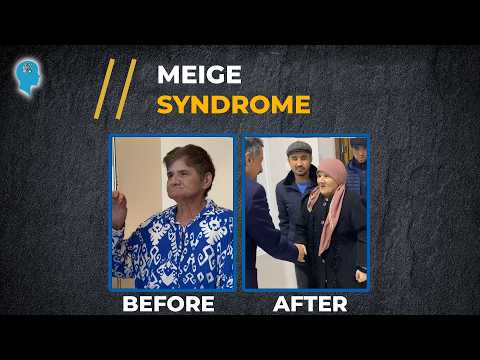
In our own case series, patients treated with DBS for cervical dystonia, Meige syndrome and myoclonus-dystonia have shown more than 90% improvement in their symptoms, based on clinical assessment and documented on video. Individual results vary. All patients gave written consent for their videos to be published. Results vary from patient to patient.

Frequently asked questions
Is DBS effective for Meige syndrome?
Yes. In a randomized double-blind trial, movement scores improved by about 60% at 12 months with either GPi or STN stimulation.[1]
Does DBS help blepharospasm in Meige syndrome?
Yes, eyelid spasms improve together with the jaw and face. Isolated blepharospasm without other cranial dystonia is usually managed with injections; DBS is considered only in severe, resistant cases.
Will DBS affect my speech?
Speech usually improves as jaw and tongue dystonia ease. Stimulation can occasionally cause slurred speech, which is corrected by changing the settings.
Can older patients have DBS for Meige syndrome?
Yes. Meige syndrome usually starts in middle age or later, and age alone is not a barrier. General health is assessed during the evaluation.
Sources
- Globus pallidus internus versus subthalamic nucleus deep brain stimulation for Meige syndrome: a randomized controlled, double-blind, multicenter trial. J Neurosurg. Published online 2026. Source
- Pallidal versus subthalamic deep brain stimulation for Meige syndrome: a systematic review and meta-analysis. Heliyon. 2024 (March). Source
- Simpson DM, Hallett M, Ashman EJ, et al. Practice guideline update summary: Botulinum neurotoxin for the treatment of blepharospasm, cervical dystonia, adult spasticity, and headache. Neurology. 2016;86(19):1818–1826. Source